Trans-Saharan Trade Era
trade between sub-Saharan Africa and North Africa
Overview
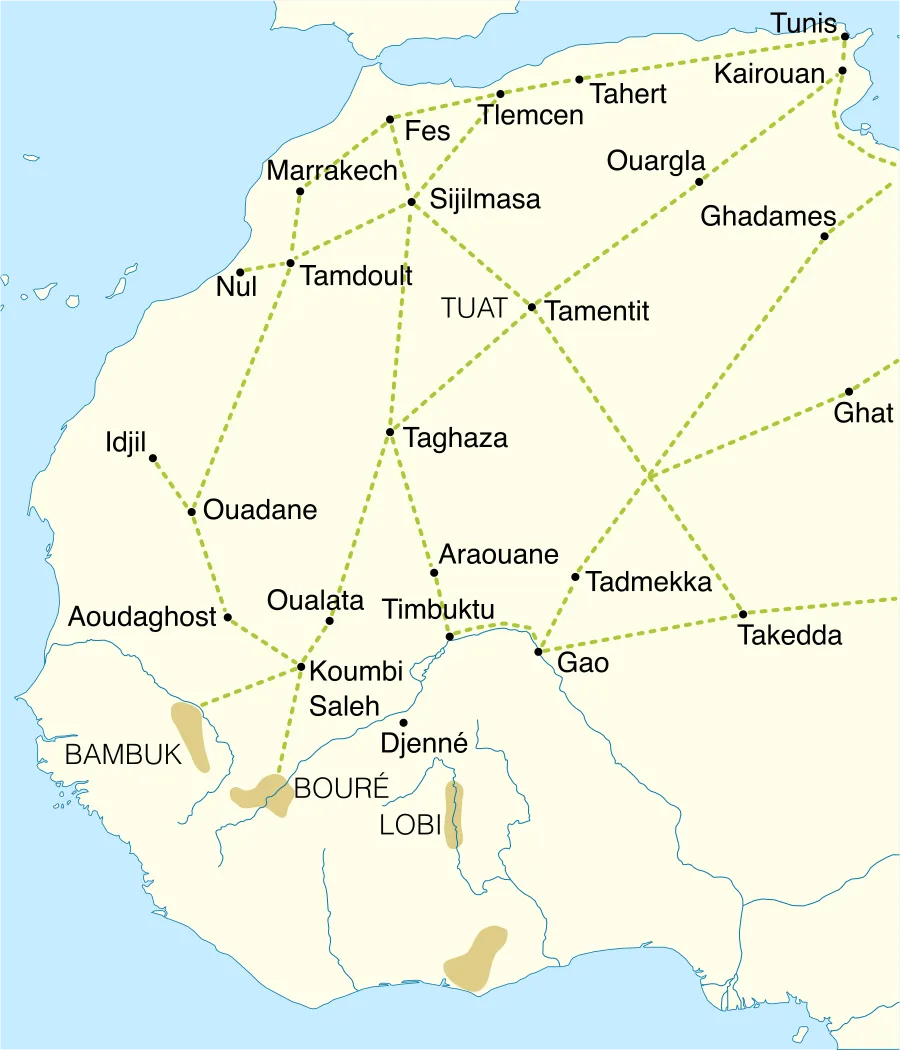
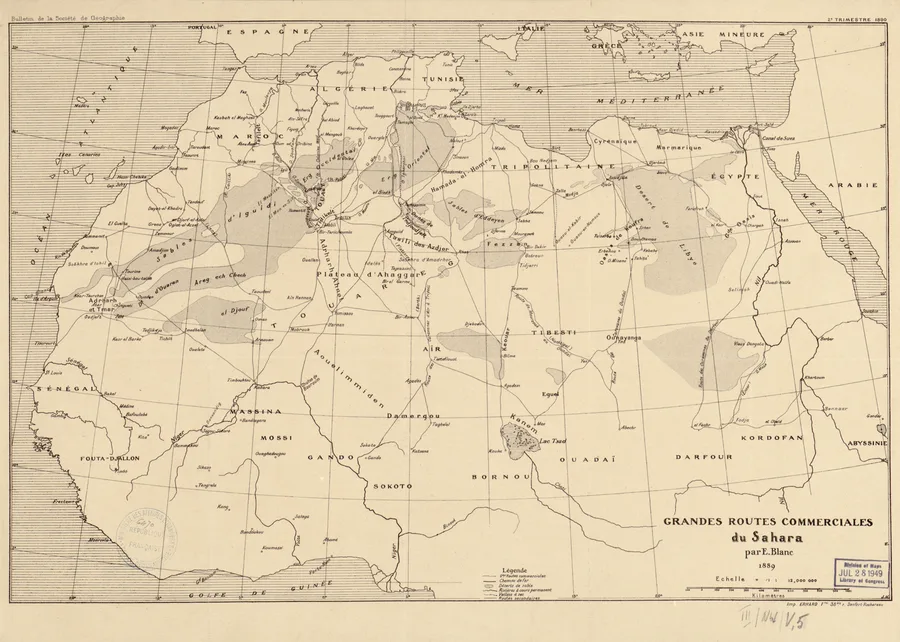
Trans-Saharan trade — the exchange of goods, people, and ideas across the Sahara Desert connecting North Africa to sub-Saharan West Africa — reached its peak between the 8th and early 17th centuries, but its roots run far deeper: trade across the northeastern Sahara dates back to Predynastic Egypt, when early Egyptians traded with Nubia and the oases of the Western Desert. This trade only became necessary as a distinct, difficult undertaking because the Sahara itself was once a very different place — pastoralism, large settlements, and pottery are documented in the region from at least 7000 BCE, and rock art dated to 3500–2500 BCE depicts wildlife that could never survive in the desert that later formed there.
The Camel Caravans
Trade across the Sahara depended entirely on the camel caravan, and the logistics were formidable: the 14th-century Moroccan traveler Ibn Battuta, who crossed the desert himself, recorded that an average caravan numbered around 1,000 camels, with some reaching as many as 12,000. Caravans were led by highly paid Berber guides whose knowledge of the desert’s water sources and safe routes was essential to survival, and successful crossings depended on careful coordination — runners were sent ahead to oases to arrange for water to be carried out to meet the caravan, since it typically could not carry enough water to make the entire journey unsupported. This was a trade network built and sustained by specialized African and Berber expertise, not a route Europeans opened or controlled.
Legacy: Gold, Salt, and Shared Faith
Trans-Saharan trade moved West African gold north in exchange for Saharan salt, along with textiles, metal goods, and other commodities, and it was this trade that built the wealth of Wagadu, Mali, and Songhai in turn — the great Sahelian empires profiled elsewhere on this site were, in large part, direct products of this trade network’s wealth. The exchange carried more than goods: many West African states adopted Arabic script and Islam through contact with North African traders, a cultural and religious exchange that shaped the region’s intellectual life for centuries and connected West African scholarly centers like Timbuktu directly to the wider Islamic world. As with the pre-colonial kingdoms it enriched, this site’s editorial standards call for scholarly rather than tourist-oriented sourcing on trans-Saharan trade, and this draft is flagged for that dedicated scholarly review before it can be approved.
Related entries
More in Business