Civil Rights Movement
Dexter Avenue King Memorial Baptist Church
church building in Alabama, United States of America
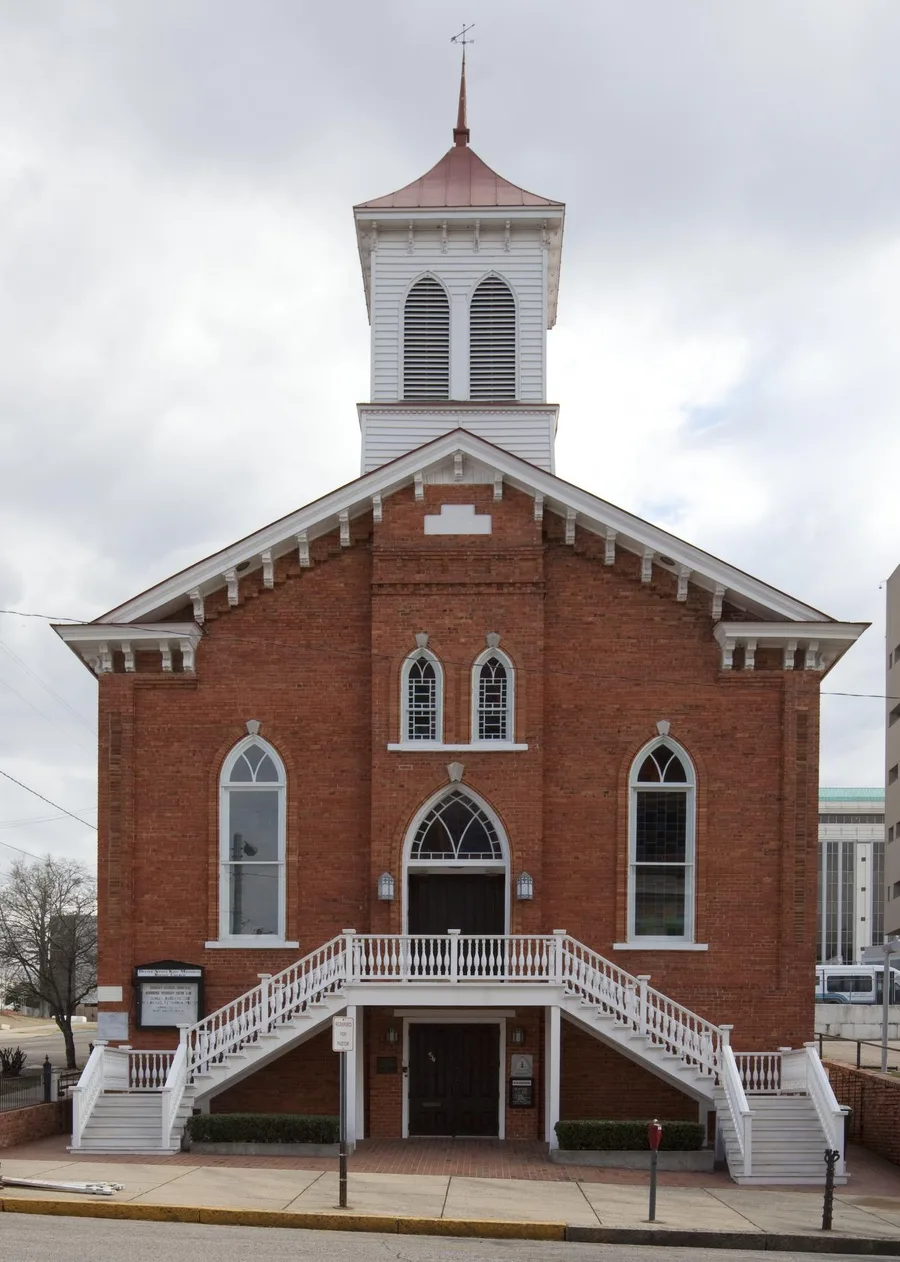
Overview
Dexter Avenue Baptist Church, organized in 1877 in Montgomery, Alabama, by freedmen and free people of color under founding pastor Charles Octavius Boothe, stands just steps from the Alabama State Capitol — a physical proximity to the seat of state power that would prove historically significant decades later. The congregation, first known as the Second Colored Baptist Church, built its permanent brick building between 1883 and 1889, and began serving the wider Black community directly in 1887, when it hosted the first-ever student registration for the historically Black Alabama State University.
Martin Luther King Jr.’s Pastorate
The church’s pastoral lineage includes founder of Selma University William H. McAlpine and early civil rights organizer Vernon Johns, but its most historically consequential pastor was Martin Luther King Jr., who served from 1954 to 1960 and organized the pivotal 1955 Montgomery bus boycott directly from his basement office at the church — meaning the strategic planning for one of the Civil Rights Movement’s foundational campaigns happened inside this building’s own walls, blocks from the Alabama Capitol whose segregationist government the boycott directly challenged.
The Parsonage Museum
Near the church stands the former Dexter Parsonage, home to twelve of the church’s pastors between 1920 and 1992, including King and his family during his own tenure; it now operates as the Dexter Parsonage Museum, interpreting the church’s history and the King family’s daily life there during the bus boycott years. The church earned its own listing on the National Register of Historic Places in 1982, a recognition granted on the strength of the congregation’s own century-plus history rather than King’s tenure alone.
Legacy
In recognition of King’s tenure and the church’s role in launching the modern Civil Rights Movement, the church was designated a National Historic Landmark in 1974 and formally renamed the Dexter Avenue King Memorial Baptist Church in 1978, and in 2008 the U.S. government submitted it to UNESCO’s Tentative List of World Heritage Sites. Dexter Avenue stands today as a direct, physical link between an 1877 congregation founded by freedpeople and the campaign, launched from within its own basement office, that helped end legal segregation in American public life.
Related
- Bayard Rustin
- Fannie Lou Hamer
- Martin Luther King Jr.
- Rosa Parks
- Thurgood Marshall
- Brown v. Board of Education National Historical Park
More in Civil Rights, Religion