Reconstruction to early 20th century
Greenwood / Black Wall Street
human settlement in Tulsa, Oklahoma, United States of America
This page discusses the 1921 Tulsa Race Massacre, an act of racial violence that destroyed a thriving Black community.
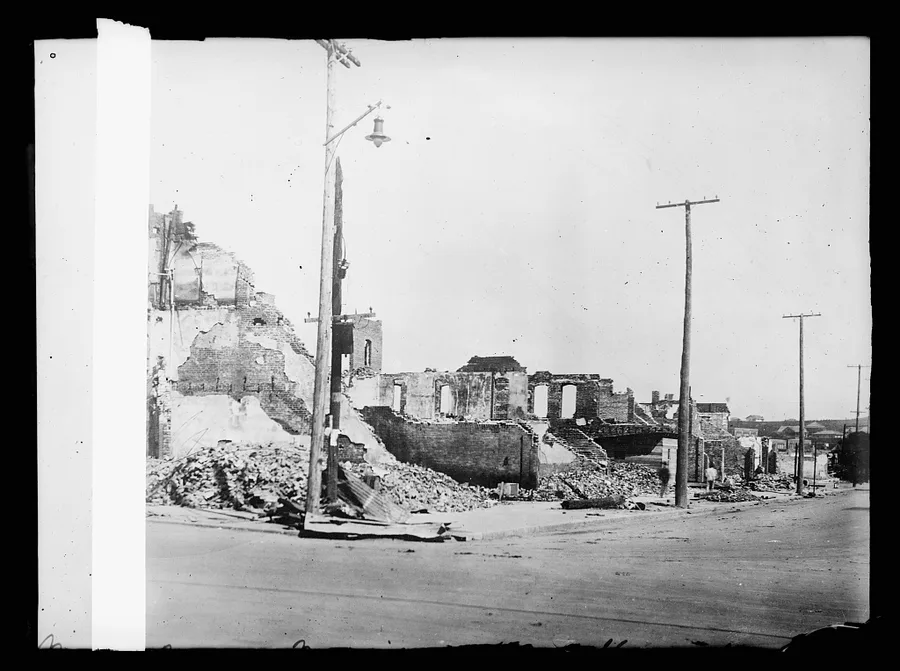
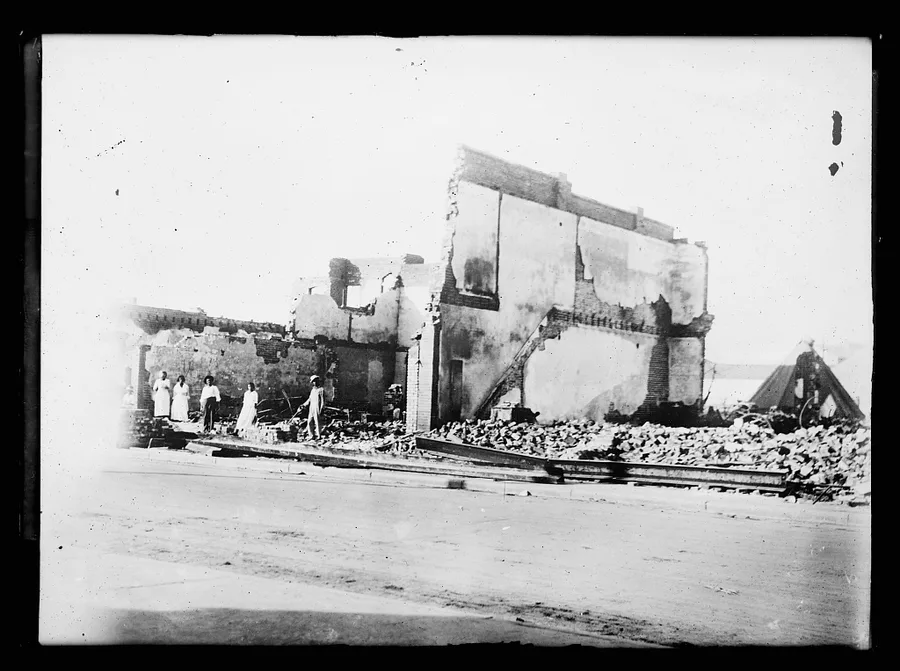
Overview
Greenwood is a historic Tulsa, Oklahoma, neighborhood that became, in the early 20th century, one of the most prominent concentrations of African American-owned businesses anywhere in the United States — a district so prosperous it earned the name “Black Wall Street.” Greenwood’s founders were part of a deliberate migration: many African Americans came to Indian Territory as enslaved people held by the Cherokee and Muscogee nations, gained citizenship in those nations as freedmen after the Civil War, and were later joined by Black settlers who traveled to Oklahoma specifically hoping a majority-Black population could build what this site’s sources describe as a “firewall” against the spread of Jim Crow segregation.
O.W. Gurley’s Rooming House
Greenwood’s commercial rise traces substantially to O.W. Gurley, a wealthy Black landowner from Arkansas who had resigned a presidential appointment under Grover Cleveland to strike out on his own, participating in Oklahoma’s 1889 land run before purchasing 40 acres of Tulsa land restricted to Black buyers in 1906. Gurley’s first business was a rooming house on a dusty trail by the railroad tracks that came to be called Greenwood Avenue, after a city in Mississippi, and it became a refuge for Black migrants fleeing Mississippi’s racial persecution, since the violence they had known in the South simply did not exist on Greenwood Avenue. Gurley’s rooming house was the seed from which the district’s characteristic corridor of red-brick Black-owned businesses grew.
A Model From Tuskegee
Greenwood’s rise was also directly connected to Booker T. Washington’s vision of Black economic self-sufficiency: Washington visited the district in 1905, encouraging residents to build cooperative “industrial capacity,” and the neighborhood took its name and organizational model directly from a similar all-Black district Washington had established outside Tuskegee. By 1921, Greenwood was home to an estimated 10,000 Black residents and a thriving corridor of Black-owned banks, hotels, theaters, and professional offices along Greenwood Avenue — one of the most successful concentrations of Black wealth-building anywhere in the country.
The 1921 Massacre and Rebuilding
In 1921, a white mob attacked and burned Greenwood to the ground in what is now known as the Tulsa Race Massacre, killing an estimated 75 to 300 Black Americans, injuring hundreds more, and destroying the homes of roughly 5,000 residents — one of the largest single acts of racial violence in American history, which this site states plainly per its sourcing standards rather than minimizing. Remarkably, within ten years, surviving residents who chose to remain rebuilt much of the district themselves, despite active opposition from white Tulsa political and business leaders and punitive rezoning laws specifically enacted to obstruct reconstruction — a documented act of collective resilience and self-rebuilding that stands alongside the massacre itself as part of Greenwood’s history. The community remained vital until desegregation in the 1950s and 1960s drew residents to shop and live elsewhere in Tulsa, and city leaders have since worked to encourage renewed economic development in the district.
Related
More in Civil Rights, Business