c. 1270 CE – 1975 CE
Ethiopian Empire (Solomonic Dynasty)
1270–1974 state in the Horn of Africa
Date range and summary are drafted from Wikidata pending a scholarly-source verification pass — treat as approximate, not settled fact, until re-sourced from academic historians/archaeologists.
Overview
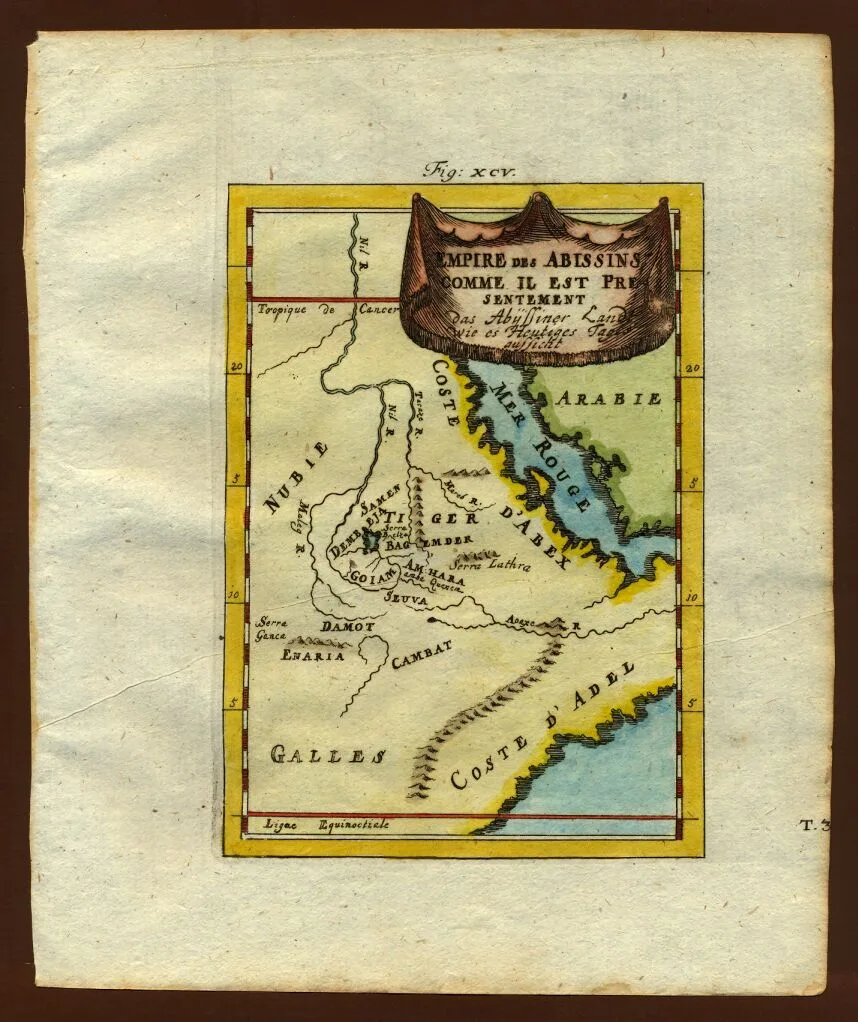
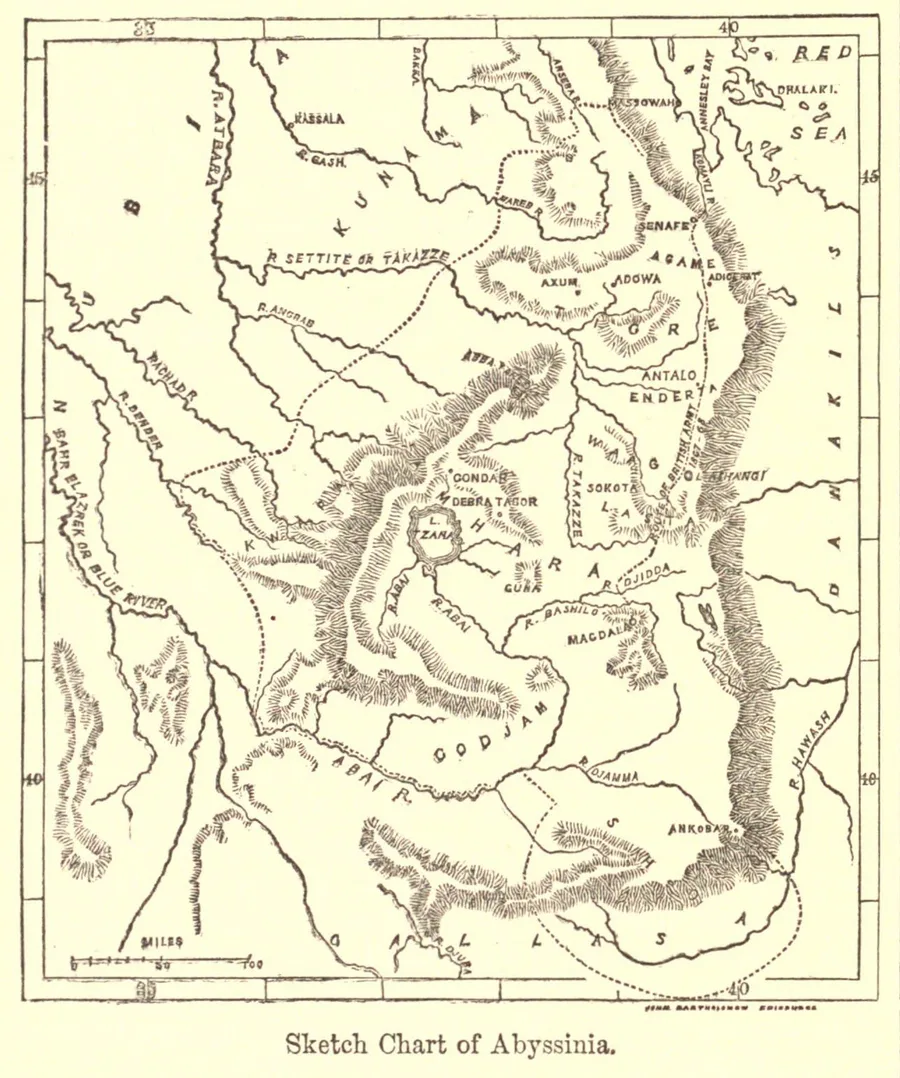
The Ethiopian Empire, historically known as Abyssinia, ranks among the longest-continuous monarchies in world history, governing the territory of present-day Ethiopia and Eritrea from the founding of the Solomonic dynasty by Emperor Yekuno Amlak around 1270 until 1974. Yekuno Amlak claimed direct descent from the ancient Aksumite kings and, through them, from the biblical King Solomon and the Queen of Sheba — a claimed lineage that gave the dynasty its name and that underpinned Ethiopian royal legitimacy for seven centuries. Crucially, Ethiopia stands as one of only two African nations, alongside Liberia, never to be colonized by a European power, a distinction its rulers actively fought to preserve.
Zara Yaqob and a Golden Age
The empire reached one of its historical peaks during the long reign of Emperor Zara Yaqob (1434–1468), who consolidated his predecessors’ territorial conquests, built numerous churches and monasteries, actively encouraged literature and religious art, and centralized imperial authority by replacing regional warlords with appointed administrative officials answerable directly to the crown — a deliberate, effective program of state-building. Ethiopia’s later Gondarine period, beginning in the 1630s under Emperor Fasilides, brought further stability, architectural achievement in the new capital of Gondar, and successful integration of Oromo populations into the empire’s political life.
The Battle of Adwa: Defeating a Colonial Invasion
Ethiopia’s most celebrated moment came in 1896, when Emperor Menelik II’s forces met an invading Italian army at the Battle of Adwa and won a decisive, historic victory using modern imported weaponry to match the Europeans on equal military terms. Adwa was not a minor skirmish — it was a full-scale defeat of a European colonial power by an African state, forcing Italy to recognize Ethiopian sovereignty and confine its colonial ambitions to neighboring Eritrea. At a moment when nearly every other African society was being carved up in the Scramble for Africa, Adwa stands as one of the single most significant military victories in African history, and it remains a foundational source of pride and pan-African inspiration to this day.
Occupation, Restoration, and Legacy
Ethiopian independence was interrupted, though never erased, when Benito Mussolini’s Italy invaded and occupied the country following the Second Italo-Ethiopian War, merging it into Italian East Africa; British-assisted forces drove the Italians out during World War II, and Emperor Haile Selassie returned from exile to resume the throne. Ethiopia went on to become a founding member of the United Nations, a fitting role for a state whose modern history is defined by resisting subjugation. Domestic famine and political unrest brought the imperial era to its final end in 1974 with the rise of the Derg military government, closing a Solomonic dynastic tradition that had governed, with interruptions, for more than seven hundred years — one of the longest continuous state traditions anywhere in the world.